

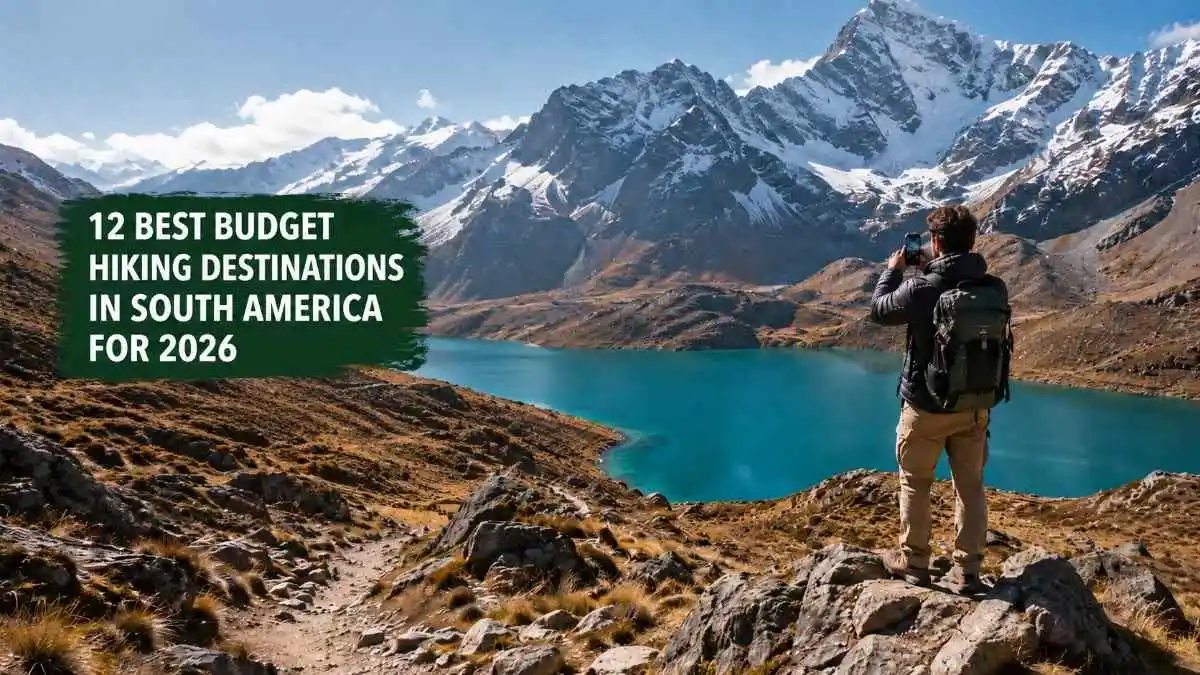
Budget hiking South America trips can include famous mountain routes, crater lakes, cloud forests, canyons, and coastal trails. The harder part is finding places where the full trip still fits a limited budget. A cheap trail can become expensive once you add a remote transfer, required guide, park pass, camping rental, and food inside a tourist town.
This guide compares 12 budget hiking destinations in South America using the costs that matter most: hostel beds, local transport, trail access, food, and guide rules. The daily ranges below are planning estimates for 2026. They cover a dorm bed, simple meals, local transport, and a normal hiking day. International flights, private rooms, technical climbs, and costly guided tours are separate.
Quick answer: Huaraz is the best all-round choice for cheap high-mountain hiking. The Quilotoa Loop is the best low-cost multi-day route with village stays. El Chaltén gives the best Patagonia day hikes, though park fees make it dearer than the Andes choices. Cajas National Park is one of the cheapest places for a full hiking day because access from Cuenca is simple and the main trails do not need a guide.
Budget hiking destinations in South America at a glance
| Destination | Country | Best for | Suggested daily budget | Best months |
|---|---|---|---|---|
| Huaraz and the Cordillera Blanca | Peru | High-altitude lakes and multi-day treks | $25–$45 | May–September |
| Quilotoa Loop | Ecuador | Village-to-village hiking | $30–$50 | June–September |
| El Chaltén | Argentina | Patagonia day hikes | $50–$80 | November–March |
| Cocora Valley | Colombia | Easier cloud-forest hiking | $30–$50 | December–February, June–August |
| Cajas National Park | Ecuador | Cheap day hikes from a city | $25–$40 | June–September |
| Colca Canyon | Peru | Canyon trekking | $30–$50 | May–September |
| La Paz and the Cordillera Real | Bolivia | Cheap city-based mountain days | $25–$45 | May–October |
| Chapada Diamantina | Brazil | Waterfalls, plateaus, and valleys | $35–$60 | May–October |
| Bariloche | Argentina | Lakes, forests, and mountain huts | $45–$75 | December–March |
| Pucón and Huerquehue | Chile | Forest and lake trails | $45–$70 | December–March |
| Ilha Grande | Brazil | Coastal hiking and beaches | $40–$70 | April–June, August–November |
| Samaipata and Amboró | Bolivia | Quiet foothill trails | $30–$50 | May–October |
These estimates can move with exchange rates, holidays, weather closures, and room demand. Keep a 15% cash buffer for transport changes, extra food, or an unplanned rest day.
How these destinations were chosen
A place made this list when independent travelers could reach useful trails without paying for a private vehicle every day. Cheap beds and local food also mattered. A low trail fee has little value when the nearest room costs $100.
I also gave more weight to places with several route choices. One rainy day should not ruin the full stay. A strong budget hiking base has a short walk, a full-day hike, and at least one longer route nearby.
1. Huaraz and the Cordillera Blanca, Peru

Best for: High-altitude lakes, snowy peaks, and cheap trekking tours
Suggested stay: 4–7 days
Budget level: Very good value
Huaraz is my first choice for travelers who want serious mountain hiking at a lower cost. The city has dorm beds, set-menu lunches, gear rental shops, shared day tours, and buses to many trailheads. You can use one base for several hikes instead of moving every night.
Laguna 69 is the best-known day route. The lake sits at about 4,600 m, so the altitude is the main test. The walking is non-technical, though the final climb feels hard when your body has had little time to adjust. Laguna Churup is another strong day hike and starts closer to Huaraz.
The Santa Cruz Trek usually takes 3 or 4 days and crosses the Cordillera Blanca through valleys, lakes, and a high mountain pass. Independent hiking cuts the tour cost, though you need camping gear, food, safe transport, and enough mountain experience. A group trek can be the better buy when rental gear and trail transfers are included.
Plan at least 2 easy days before your first hike. Huaraz sits above 3,000 m, and several routes go far higher. A slow first day, water, sleep, and light meals can make the next hike safer.
Typical costs
- Hostel dorm: $8–$18
- Local meal: $2–$6
- Shared Laguna 69 trip: often $15–$30, plus park entry
- Gear rental: depends on the item and number of days
- Independent local transport: usually cheaper, with more planning risk
Huaraz pairs well with a longer Peru route. Travelers coming from Puno can use this Lake Titicaca travel guide to plan the southern part of the trip before heading north.
2. Quilotoa Loop, Ecuador

Best for: A cheap multi-day hike without camping
Suggested stay: 3–4 hiking days
Budget level: Excellent value
The Quilotoa Loop is one of the easiest multi-day routes to plan on a small budget. Hikers move between Andean villages and sleep in guesthouses. Many stays include dinner and breakfast, and some sell a packed lunch for the next day.
The classic route goes from Sigchos to Isinliví, Chugchilán, and Quilotoa. It covers about 40 km over 3 days. The final climb reaches the crater area near 3,900 m, so the last day can feel slow even for fit walkers.
A normal 3-day budget is around $90 to $150. Local buses cost little, guesthouses are simple, and camping equipment is not needed. This keeps the final cost easier to predict than a remote tent trek.
Trail finding can be confusing at a few turns. Download an offline map before leaving Latacunga, carry cash in small notes, and start each morning early. Fog and rain can slow the route.
The full Quilotoa Loop guide has the 3-day route, village stops, distance for each day, and a full cost table.
Typical costs
- Guesthouse: $20–$35, often with breakfast and dinner
- Packed lunch: $4–$7
- Bus between main towns: usually a few dollars
- Full 3-day plan: about $90–$150
Choose the reverse direction from Quilotoa when you want more downhill walking. Choose Sigchos to Quilotoa when you want the crater lake at the end.
3. El Chaltén, Argentina

Best for: Self-guided Patagonia day hikes
Suggested stay: 3–5 days
Budget level: Mid-range by South American standards
El Chaltén has some of the best town-to-trail access on the continent. Several major routes start within walking distance of hostels and guesthouses. That removes the need for a tour or taxi on many days.
Laguna de los Tres is the main Fitz Roy route. Plan for about 20 to 25 km, 8 to 10 hours, and a steep final climb. Laguna Torre is another full-day choice. Laguna Capri and Mirador de los Cóndores work better for shorter days.
Patagonia costs more than Peru, Bolivia, or Ecuador. Dorm beds rise during the summer season, food costs are higher, and Los Glaciares National Park now charges at the northern trail portals. The general visitor rate listed from June 2026 is ARS 50,000, with a 3-day pass at ARS 100,000. Peso prices can change, so check the current rate before travel.
The hiking still gives good value because the routes are commonly walked without a guide in dry summer conditions. Buy food from a supermarket or bakery, stay in a dorm with a kitchen, and keep 2 possible days for Fitz Roy. Cloud and wind can hide the peaks for a full day.
Use the El Chaltén hikes guide for a wider trail plan.
Typical costs
- Hostel dorm: $20–$45 in the main season
- Park entry: check the live peso rate
- Trail transport from town: $0 for several main routes
- Grocery lunch: far cheaper than eating every meal out
- El Calafate bus: one of the main extra costs
Book the bed before booking smaller activities. Cheap rooms sell first from January through March.
4. Cocora Valley, Colombia

Best for: First-time hikers, cloud forest, and palm views
Suggested stay: 2–3 nights in Salento
Budget level: Good value
Cocora Valley is a softer choice than the highest Andes routes. The full loop is about 12 km and usually takes 4 to 6 hours. It passes wax palms, farmland, cloud forest, streams, and wooden bridges.
Salento is the budget base. Shared Willys Jeeps leave from the main square and reach the valley in about 20 to 30 minutes. The ride is cheap, hostels are easy to find, and local restaurants serve filling meals.
The route has separate small charges at private access points, so carry cash. Mud is common after rain. Shoes with grip matter more here than heavy mountain gear.
The short palm route works for travelers who do not want the full loop. It reaches the famous wax-palm views with less climbing and far less time. The full route suits hikers who want forest sections and river crossings.
This Cocora Valley Colombia guide explains the full loop, short route, Willys Jeep transport, and the best walking direction.
Typical costs
- Hostel dorm in Salento: $10–$20
- Willys Jeep: low-cost shared fare
- Trail charges: small cash payments at access points
- Local meal: $3–$8
- Full hiking day: often under $25 after accommodation
Start before 8:00 a.m. Morning conditions are often clearer, and the first Jeeps carry fewer day visitors.
5. Cajas National Park, Ecuador

Best for: A low-cost hiking day from Cuenca
Suggested stay: 2–4 nights in Cuenca
Budget level: Excellent value
Cajas National Park sits about 30 km west of Cuenca. Public buses and shared transport make it possible to reach the main access area without a costly tour. The park has high moorland, lakes, rocky ridges, and paper-tree forest.
Routes range from short lake walks to long paths through wet high ground. La Toreadora is the common starting area. The altitude runs from about 3,100 m to more than 4,000 m, so cool air can make a short route feel harder than expected.
The weather can switch between sun, fog, rain, and cold wind. Carry a rain jacket, warm layer, dry bag, and offline map. Marked routes can become harder to follow in thick fog.
Cuenca keeps the trip cheap. Stay near a bus route, buy food before leaving, and return to the city for dinner. This avoids the high cost of sleeping in a remote lodge.
Typical costs
- Hostel dorm in Cuenca: $8–$18
- Local bus or shared ride: a few dollars each way
- Trail fee: often free, though rules can change
- Packed food and water: $5–$10
- Full day from Cuenca: often under $20 before accommodation
Cajas is a good first altitude stop before a longer Ecuador trek. Spend a day in Cuenca first when you have arrived from sea level.
6. Colca Canyon, Peru

Best for: A 2-day or 3-day canyon hike
Suggested stay: 3–5 days from Arequipa
Budget level: Very good value
Colca Canyon is a strong choice for travelers who want a multi-day route without high tour prices. The common path drops from the canyon rim to small settlements and the Sangalle oasis, then climbs back to Cabanaconde.
The descent can feel easy at first. The return climb is the hard part. Many hikers begin before sunrise to avoid heat on the exposed slope.
Independent travel keeps costs down. Buses connect Arequipa, Chivay, and Cabanaconde, and simple guesthouses sit inside the canyon. You still need the regional tourist ticket, water, food, and enough cash for small stays.
A 2-day plan is fast and tiring. A 3-day plan gives more rest and time in the villages. Choose the longer plan when you have sore knees, limited hill training, or hot weather.
Typical costs
- Hostel dorm in Arequipa: $8–$18
- Bus to the canyon area: low-cost public option
- Tourist ticket: budget for a separate regional fee
- Canyon guesthouse: $10–$25
- Guided group trek: often cheaper than private booking
Colca has lower sleeping points than many Peru mountain trails, though the rim is still high. Travelers who want to compare altitude, trail length, and tour prices can read the Rainbow Mountain Peru guide.
7. La Paz and the Cordillera Real, Bolivia
Best for: Cheap mountain days from a major city
Suggested stay: 4–7 days
Budget level: Excellent value
La Paz is one of the cheapest bases for high-altitude hiking in South America. Dorm beds, market food, cable cars, local minibuses, and shared trips keep daily spending low.
Start with city-edge routes such as Muela del Diablo, Valle de las Ánimas, or walks near Palca. These places give a mountain day without the cost of a remote camp. They also give your body time to settle at altitude.
The Cordillera Real has harder routes near Condoriri, Tuni, and Huayna Potosí. Day hikes may be possible with shared transport and a local guide. Summit climbs need proper equipment and trained guides. Keep those costs outside a normal backpacker budget.
La Paz itself sits at very high elevation. Give yourself 2 easy days before a hard route. Use the cable-car network for sightseeing and keep the first walk short.
Typical costs
- Hostel dorm: $7–$15
- Market or set-menu meal: $2–$5
- City cable car and minibus travel: low cost
- Shared mountain day trip: depends on distance and group size
- Technical climb: much higher than the daily ranges in this guide
Bolivia works well for a slow trip. Extra acclimatization days cost less here than in Patagonia or southern Chile.
8. Chapada Diamantina, Brazil
Best for: Waterfalls, table mountains, caves, and warmer hiking
Suggested stay: 4–7 days
Budget level: Good value with careful route choices
Lençóis is the main base for Chapada Diamantina. The town has hostels, simple restaurants, travel agencies, and access to short trails. Several nearby walks can be done without a guide in normal conditions.
Popular day choices include Ribeirão do Meio, Serrano, and Cachoeira da Primavera. Longer routes reach high viewpoints, waterfalls, and the Vale do Pati area. Remote paths can be hard to follow, and a guide is a sensible cost for multi-day trips.
Brazil can feel dearer than Bolivia or Peru, though Chapada still beats many famous trekking regions. Stay in one base, cook some meals, join a small group for distant trailheads, and use self-guided routes on easier days.
The wet and dry seasons change the route choice. Heavy rain can raise rivers and make rock slippery. The driest period gives easier walking, though some waterfalls carry less water.
Typical costs
- Hostel dorm: $12–$25
- Simple meal: $4–$10
- Nearby self-guided trail: low cost
- Shared day tour: $25–$60
- Multi-day guided trek: a separate larger expense
Travelers building a longer Brazil and Argentina trip can add the falls with this Iguazu Falls travel guide. Leave a full travel day between the regions.
9. Bariloche, Argentina

Best for: Mountain huts, lakes, and forest trails
Suggested stay: 4–6 days
Budget level: Mid-range
Bariloche is a more flexible Patagonia base than many small mountain towns. City buses reach trail areas, supermarkets cut food costs, and the region has short walks plus long mountain days.
Refugio Frey is the classic budget route. The normal path from Villa Catedral takes around 4 hours one way for many hikers. The trail passes forest and rises to Laguna Toncek beside the mountain hut.
A day hike costs little once you reach the trailhead. An overnight stay adds a hut bed or campsite charge, food, and a reservation. Carrying your own lunch keeps the day cheaper.
Other useful routes include Cerro Llao Llao, Cerro Campanario, Lago Gutiérrez paths, and longer hut links for hikers with enough time. Snow can remain on higher routes outside summer.
Typical costs
- Hostel dorm: $18–$35
- Local bus: much cheaper than a taxi
- Day trail access: often low cost
- Hut or campsite: separate reservation cost
- Supermarket food: the main budget saver
Choose accommodation near a useful bus line instead of paying more for the town centre. Ask the hostel which transport card or payment method is current.
10. Pucón and Huerquehue National Park, Chile
Best for: Araucaria forest, lakes, and a clean day-hike setup
Suggested stay: 3–5 days
Budget level: Mid-range
Pucón is known for volcano trips, though the cheaper hiking value sits in Huerquehue National Park and nearby reserves. Public transport runs from Pucón to the park area during the main season.
The Los Lagos Trail is the main day route. It climbs through forest to mountain lakes and old araucaria trees. The path is easier to plan than a volcano ascent and does not require technical gear in normal summer conditions.
A guided Villarrica Volcano climb costs far more because it needs equipment, transport, and guide support. Treat it as an optional extra. A traveler can spend several days around Pucón using forest walks, lake paths, and one park day.
Chile has higher food and room costs than Peru or Bolivia. A hostel kitchen, early booking, and public bus make a clear difference.
Typical costs
- Hostel dorm: $15–$30
- Public bus to the park: low-cost seasonal route
- Park ticket: separate fee
- Packed lunch: cheaper from a supermarket
- Guided volcano climb: outside the normal daily range
Reserve the park ticket when the current system asks for advance booking. Entry limits can apply during busy summer dates.
11. Ilha Grande, Brazil
Best for: Coastal paths, rainforest, and beach stops
Suggested stay: 3–5 days
Budget level: Good value outside holidays
Ilha Grande gives a very different type of hiking trip. The island has more than 150 km of paths and no normal road network linking the villages. Trails connect beaches, forest, waterfalls, and small settlements.
Vila do Abraão is the main base. The walk to Lopes Mendes is one of the most popular routes and takes about 2 hours each way for many visitors, depending on the path and stops. Boat returns can shorten the day, though they add cost.

The main expense is reaching the island and sleeping there. Once based in Abraão, several trails are free. Buy snacks and water in town because beach kiosks can charge more.
Humidity and heat make distance feel longer. Start early, carry more water than you would for a cool mountain route, and protect food from rain.
Typical costs
- Hostel dorm: $15–$30
- Ferry or fast boat: separate arrival cost
- Walking trails: generally free
- Local meal: $5–$12
- Optional boat return: depends on route and season
Avoid Brazilian holiday weekends. Beds and boats rise in price, and the busiest beaches lose much of their quiet feel.
12. Samaipata and Amboró, Bolivia
Best for: Quiet foothills, forest, and lower daily costs
Suggested stay: 3–5 days
Budget level: Very good value
Samaipata is a small town west of Santa Cruz. It has a mild climate, cheap rooms, cafés, and access to hills, waterfalls, and the southern side of Amboró National Park.
Some short walks near town can be planned independently. Forest routes inside protected areas usually need local transport and a guide. Grouping with other travelers keeps the fee lower.
This destination suits hikers who want a break from very high altitude. The foothill climate is warmer, and the routes can be green and wet. Rain can close roads or make river crossings unsafe.
Samaipata has fewer daily departures than a major tourist base. Keep one spare day and ask your hostel about current road conditions before paying for a trip.
Typical costs
- Hostel dorm: $8–$18
- Local meal: $2–$6
- Shared guided day: $20–$50
- Short local walk: low cost
- Santa Cruz transport: cheaper by shared vehicle or bus
The town is calm enough for a rest day. This can reduce the risk of booking a paid forest trip when the weather is poor.
Which budget hiking destination should you choose?
Choose Huaraz for the largest number of cheap high-mountain routes.
Choose the Quilotoa Loop for a multi-day hike with guesthouse beds and meals.
Choose El Chaltén for Patagonia views and long self-guided day hikes.
Choose Cocora Valley for an easier first hike with simple transport.
Choose Cajas National Park for one of the cheapest full hiking days.
Choose Colca Canyon for a hard 2-day or 3-day route with village stays.
Choose La Paz when you want cheap acclimatization days and several mountain options.
Choose Chapada Diamantina for warm-weather trails and waterfalls.
Choose Bariloche for hut hiking and strong public transport.
Choose Pucón for forest trails in Chile without paying for a full Patagonia circuit.
Choose Ilha Grande for coastal walking and swimming.
Choose Samaipata for a quieter Bolivia stop at lower altitude.
A realistic 2-week budget hiking route
A 2-week trip works best when the stops sit in the same country or on a simple transport line. Crossing the continent for 3 distant hikes can cost more than the hiking itself.
Peru route
- 2 nights in Lima
- Overnight bus to Huaraz
- 5 nights in Huaraz
- Return to Lima
- Fly or bus to Arequipa
- 3 or 4 nights for Colca Canyon
- 1 spare travel day
This route gives mountain lakes and canyon hiking. It also keeps most long travel inside one country.
Ecuador and Colombia route
- 2 nights in Quito
- 1 night in Latacunga
- 3 days on the Quilotoa Loop
- Travel to Cuenca for Cajas
- Fly north or continue overland to Colombia
- 3 nights in Salento for Cocora Valley
This plan needs more transport time, so 3 weeks gives a calmer pace.
Argentina route
- 3 nights in Bariloche
- Fly south through Buenos Aires or another connection
- 4 nights in El Chaltén
- 2 nights in El Calafate
- Keep 2 weather buffer days
Argentina is the dearer route on this list. Book transport and dorm beds early. Before choosing your hiking days, check this Fitz Roy hike guide for the Laguna de los Tres distance, 2026 entry fee, packing list, and final steep climb.
Where budget hikers spend too much
Booking every hike as a tour
A shared tour makes sense for remote access, hard route finding, or safety. Town-edge routes and marked day trails often work without one. Use paid support where it solves a clear problem.
Changing bases too often
Each move adds bus fares, terminal snacks, taxi rides, and lost hiking time. Stay 3 or 4 nights in a base with several trails.
Arriving without altitude time
A rushed high-altitude plan can lead to a missed hike and an extra hotel night. Huaraz, La Paz, Quilotoa, and high Peru routes need slower first days.
Renting gear one item at a time
Daily rental can cost more than a group package on a multi-day trek. Compare the full cost of tent, sleeping bag, mat, stove, transport, entry, and food before choosing independent hiking.
Buying trail food near the entrance
Small shops and park cafés charge more. Buy bread, fruit, nuts, chocolate, and water in the base town.
Ignoring weather buffer days
A cheap flight has little value when one storm cancels the only hiking day. Keep at least 1 spare day for Patagonia and high mountain routes.
What to pack for low-cost hiking in South America
You do not need the same gear for every destination. A cloud-forest day in Colombia is different from a 4,600 m lake hike in Peru.
For most day hikes, pack:
- Shoes with good grip
- Rain jacket
- Warm mid-layer
- Sun hat
- Sunglasses
- Sunscreen
- 1.5 to 2 litres of water
- Lunch and 2 snacks
- Offline map
- Portable charger
- Small first-aid kit
- Cash in small notes
- Headlamp for long routes
For multi-day mountain routes, add a sleeping system, dry bags, water treatment, stove, extra food, and a shelter suitable for local weather. Rent only after checking the condition of each item.
Best time for budget hiking in South America
There is no single dry season for the full continent.
May to September is the main dry hiking period in Peru and Bolivia. Nights can be cold, and popular routes are busy in July and August.
June to September is a good period for the Ecuador highlands, though rain and fog remain possible.
December to March is the main summer hiking period in Patagonia, Bariloche, and southern Chile. This is also the busiest and most expensive period.
April to June and August to November can give better value on Ilha Grande outside major holiday weeks.
Shoulder months often cut room prices. They also bring a higher chance of rain, snow, or limited transport. Check local trail reports close to the hiking date.
Safety and altitude
High altitude deserves a slow plan. Headache, nausea, poor sleep, unusual tiredness, and dizziness can be warning signs. Stop climbing when symptoms grow. Move lower and seek medical care for severe symptoms, confusion, trouble walking, or breathing problems at rest.
Weather can change fast in Patagonia, Cajas, Huaraz, and the Cordillera Real. Carry layers even when the base town feels warm. Tell your hostel where you are going on quiet routes.
Use a guide for glacier travel, technical peaks, winter conditions, unclear remote paths, and routes where local rules require one. Cheap travel should still include the safety cost the route needs.
Final thoughts
The best budget hiking destinations in South America keep the full trip manageable. Huaraz, Quilotoa, Cajas, La Paz, and Colca give the lowest day-to-day costs. El Chaltén, Bariloche, and Pucón cost more, though public transport and self-guided trails can still keep them within a backpacker plan.
Start with one region, use fewer bases, and leave room for weather. A simple trip with 3 strong hikes usually costs less and feels better than a rushed route across 4 countries.