
South America has salt flats that reflect the sky, glaciers beside mountain towns, tropical wetlands filled with wildlife, and waterfalls spread across two countries. Travelers searching for natural attractions South America can choose from easy day trips, remote boat trips, and hikes that take several days.
The distance between these places is often the hardest part of planning. Choose one region, leave room for weather delays, and check altitude before adding several mountain stops. This guide compares 20 major attractions by season, cost, access, and physical effort.
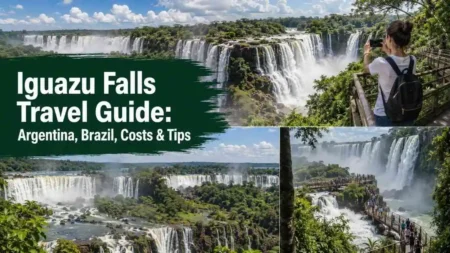
1. Iguazu Falls, Argentina and Brazil
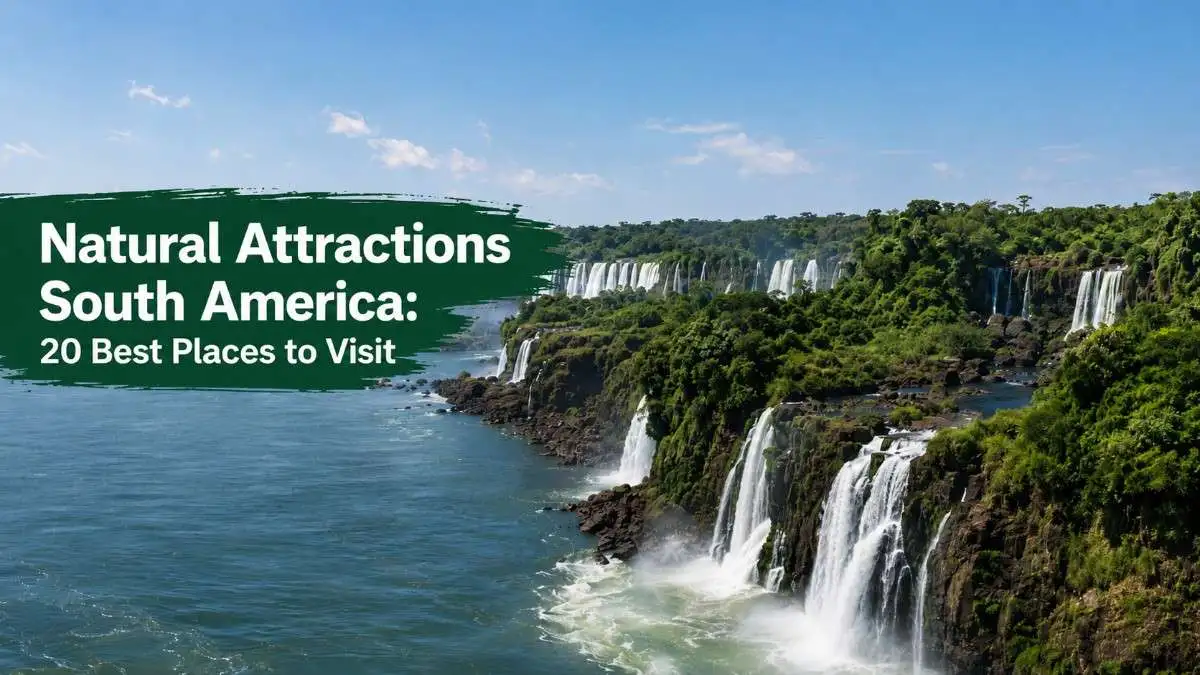
Iguazu is one of the easiest major nature stops to add to a South America trip. The waterfall system stretches for almost 3 kilometres through protected Atlantic Forest, and each country gives a different view. Argentina has longer walking circuits near many falls. Brazil gives a wide view across the system.
As of 5 August 2026, the general foreign entry price on the Argentine side is ARS 60,000. The Brazilian concession lists a full ticket at R$134. Argentina also has a 50% second-day discount when the conditions are met and the return falls within the stated period.
Plan 2 full days. Stay in Puerto Iguazú or Foz do Iguaçu. Use 1 day for each side and keep border time in your schedule.
For transport details, park circuits, and a full cost plan, read the Iguazu Falls Travel Guide.
2. Galapagos Islands, Ecuador
The Galapagos sit about 1,000 kilometres from mainland Ecuador. The protected area includes 19 main islands and a large marine reserve. Travelers come for giant tortoises, marine iguanas, sea lions, birds, and clear-water trips between islands.

The current Galapagos National Park fee for most foreign adults is USD 200, and the Transit Control Card costs USD 20. Flights, inter-island transport, guided day trips, and accommodation make this one of the most expensive choices on the list.
Plan at least 6 to 8 days. A land-based trip usually costs less than a cruise. Choose 2 or 3 islands and stay several nights on each.
3. Amazon rainforest, Brazil and Peru
The Amazon has several entry points, so the right base depends on the trip you want. Manaus in Brazil works well for river cruises, forest lodges, the Meeting of Waters, and trips that focus on rivers. Peru has lodge routes near Puerto Maldonado and longer guided trips into Manu.
Manu requires organized access in many zones, and Peru’s official page recommends the April to November period. Current entry fees vary by length, with listed foreign rates from S/30 for 1 day to S/150 for longer visits.
Plan 3 to 5 nights. A cheaper lodge near a gateway city can give you forest walks and boat trips. Deeper routes take more time and usually cost more.

4. Salar de Uyuni, Bolivia
Salar de Uyuni covers about 10,582 square kilometres at roughly 3,700 metres above sea level. During the wet months, shallow water can create the famous sky reflection. During the dry months, vehicles can reach more of the salt flat and multi-day routes are easier to run.
The mirror season usually falls between December and March, though heavy rain can close parts of a route. May to November has dry white salt, colder nights, and easier access to distant areas.
Plan 1 day for the salt flat or 3 days for the wider circuit. The longer tour often includes coloured lagoons, geysers, desert roads, and basic overnight stays. Altitude sickness can affect travelers arriving straight from low elevation.

5. Atacama Desert, Chile
San Pedro de Atacama is the main base for Valle de la Luna, high-altitude lagoons, Piedras Rojas, salt flats, and El Tatio. The region has short sunset trips near town and full-day trips that climb much higher.
Start with a lower trip near San Pedro. Add the high-altitude sites after your body has had time to adjust. Nights can feel cold even after a warm afternoon.
Plan 3 to 5 days. Tours add up fast, so choose 2 major day trips and use a bicycle or shared transfer for nearby places.

6. Torres del Paine National Park, Chile
Torres del Paine has granite peaks, lakes, glaciers, and multi-day hiking routes. Day visitors can reach several viewpoints, while longer hikers use the W or O circuits.
Chile’s park authority changed the tariff system on 1 May 2026. Tickets now separate 1-day visits from passes for 2 or more days, with the longer ticket valid for up to 10 days. Check the live official rate before payment because the park uses date-based prices and visitor categories.
Plan 2 days for viewpoints or 4 to 5 days for the W route. Reserve campsites or refugios early for the main summer months. Wind can slow hikers and close exposed sections.

7. Perito Moreno Glacier, Argentina
Perito Moreno lies inside Los Glaciares National Park, part of a protected area fed by the southern Patagonian ice field. The main visitor area has walkways that give close views of the glacier without a hard hike.
The general park ticket has been ARS 50,000 since 1 June 2026. Boat trips and guided ice activities cost extra.
Plan 1 full day from El Calafate. Add a second day for a boat trip or another section of the park.

8. Fitz Roy and Laguna de los Tres, Argentina
El Chaltén is the best base for Fitz Roy hikes. The Laguna de los Tres route is about 25 kilometres return and usually takes a full day. The final climb is steep, and the official local guide rates the route medium to high in difficulty.
Weather decides how much you see. Keep 3 nights in El Chaltén so you can choose the clearest day for the main hike.
Plan 3 to 4 days. Shorter routes include Laguna Capri and Mirador de los Cóndores. Read the Fitz Roy Hike Guide and El Chaltén Hikes guide before choosing your route.
9. Marble Caves, Chile
The Marble Caves sit on General Carrera Lake near Puerto Río Tranquilo. Water has shaped the marble walls into curved chambers that visitors see by boat or kayak. Chile’s tourism site lists the drive from Coyhaique at about 240 kilometres and around 5 hours.
Tours depend on wind and lake conditions. A tight 1-night schedule creates a real risk of missing the trip after a cancellation.
Plan 2 nights in Puerto Río Tranquilo. Book an early tour and keep the following morning free as a backup.
10. Lençóis Maranhenses National Park, Brazil
Lençóis Maranhenses has wide white dunes with seasonal freshwater lagoons. Brazil’s tourism authority describes a protected area of about 155,000 hectares. Rain from February to May fills the low spaces between dunes, and many lagoons shrink during the drier months.

June to August is a practical target because the rains have recently filled many lagoons. This timing is an inference from the park’s rain and dry-season cycle, so check recent water reports before booking.
Plan 3 to 4 days. Barreirinhas has the easiest range of tours. Santo Amaro often gives faster access to deeper lagoon areas.
11. Pantanal, Brazil
The Pantanal is a vast tropical floodplain known for open wildlife viewing. Travelers may see caimans, capybaras, giant otters, birds, and jaguars. Brazil’s tourism guidance points to the dry season as the best period for wildlife watching because animals gather near remaining water.

Jaguar trips often run from July to November as water levels fall and access improves in key viewing areas.
Plan 3 to 5 nights. Choose a lodge or fazenda with morning and late-afternoon trips included. A very cheap package may exclude transfers, boat trips, or park fees.
12. Huascarán National Park, Peru
Huascarán National Park protects a large part of Peru’s Cordillera Blanca. Peru’s official park information lists 712 glaciers and 434 lagoons, with May to October as the recommended visiting period.
Huaraz is the common base for lake hikes, mountain viewpoints, and longer treks. The altitude is serious, even on day trips.
Plan 4 to 7 days. Spend your first 1 or 2 days on easier walks before adding a high lake or mountain pass.
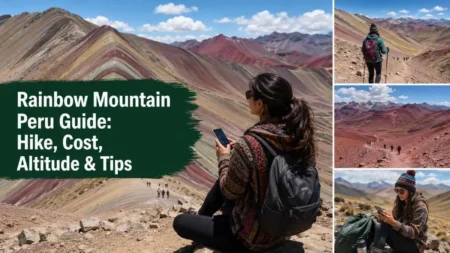
13. Rainbow Mountain, Peru
Rainbow Mountain is a long day trip from Cusco with a high trailhead, cold morning temperatures, and a steep effect from altitude. The walk itself is shorter than many Patagonia hikes, yet breathing can feel much harder at this elevation.
Go after at least 2 or 3 nights in Cusco. Check the forecast because cloud, rain, or snow can cover the coloured slopes.
Plan 1 full day. Compare group tours by departure time, breakfast, entrance fee, guide language, and oxygen support. Read the Rainbow Mountain Peru Guide for the full route and cost breakdown.
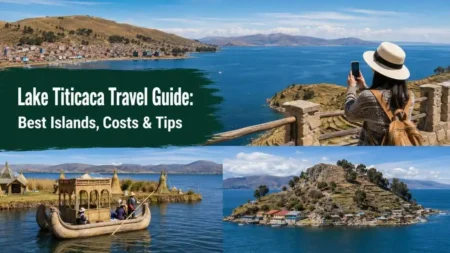
14. Lake Titicaca, Peru and Bolivia
Lake Titicaca sits high in the Andes between Peru and Bolivia. Puno is the main base on the Peruvian side. Boat routes reach the Uros floating islands, Amantani, and Taquile, with community stays and local transport available in several areas.
A day tour gives limited time. A 2-day plan allows an island stay or a slower route without rushing back before dark.
Plan 2 to 3 days. The official climate guide lists a dry period from April to October, with cold nights and bright sunny days. Read the Lake Titicaca Travel Guide before choosing between a day trip and an overnight stay.
15. Colca Canyon, Peru
Colca Canyon can be visited from Arequipa as a long day trip or a multi-day hike. The area is known for deep canyon views, terraced slopes, hot springs, and Andean condors. Peru’s tourism material lists Colca as a main nature stop near Arequipa.
The classic trek involves a major descent followed by a hard climb. A viewpoint tour needs less effort and suits travelers with limited time.
Plan 2 days for a tour or 2 to 3 days for hiking. Carry cash for small fees, water, meals, and hot springs.
16. Quilotoa crater lake, Ecuador
Quilotoa is a blue-green crater lake in Ecuador’s high Andes. Visitors can walk down to the water, circle parts of the rim, or link nearby villages on the Quilotoa Loop. Ecuador’s tourism authority lists hiking and local community visits as the main activities.
A full loop usually takes several days and includes repeated climbs. Fog can hide the lake, so an early start gives you more time for changing weather.
Plan 1 day for the crater or 3 days for the loop. Read the Quilotoa Loop Guide for route order, accommodation, and daily costs.
17. Cocora Valley, Colombia
Cocora Valley is known for very tall wax palms, green hills, cloud forest, and walking trails near Salento. Colombia’s tourism site says the palms can reach about 60 metres.
The standard loop is roughly 12 to 13 kilometres and often takes 5 to 7 hours, depending on mud, stops, and route direction.
Plan 1 full day. Start early, carry rain protection, and wear shoes with grip. Read the Cocora Valley Colombia Guide for the loop, transport, and entry costs.
18. Tayrona National Park, Colombia
Tayrona combines forest paths, rocky coast, swimming beaches, and simple overnight stays. As of 3 July 2026, Colombia’s park authority reported normal operation in all sectors, with entry hours from 8:00 a.m. to 4:00 p.m. and last entry at 2:00 p.m.
The park has planned annual closure periods from 1 to 15 February, 1 to 15 June, and 19 October to 2 November. Current rules also restrict pets and single-use plastics and require accident insurance.
Plan 2 days if you want a beach stay. Check which beaches allow swimming because currents make some sections unsafe. Read the Tayrona National Park Guide before booking transport or accommodation.
19. Caño Cristales, Colombia
Caño Cristales lies in the Sierra de La Macarena area. Access usually starts in La Macarena, followed by a boat ride, a 4×4 transfer, and walking inside the protected area.
The river’s colours depend on seasonal water conditions and sunlight, so confirm the operating season before buying flights. Guided access and limited transport make the trip more expensive than many mainland Colombia attractions.
Current foreign travel advice warns of serious security risk in and around La Macarena National Park in Meta. Check advice from your own government and confirm that travel insurance remains valid before booking.
Plan 3 to 4 days. Use a registered local operator and avoid a schedule with a same-day flight connection.
20. Angel Falls and Canaima National Park, Venezuela
Canaima National Park covers about 3 million hectares and contains many flat-topped mountains. Angel Falls drops for close to 1,000 metres from Auyán-tepui, making it the park’s best-known natural sight.
Trips usually need flights, river transport, local guides, and basic camp stays. Water level affects boat access.
Current travel advice needs serious attention. The United States lists Venezuela at Level 3 overall and places some areas at Level 4. Its current advice includes rural parts of Bolívar state, where Canaima is located, within a do-not-travel area.
Delay this trip when official advice, flight access, or insurance does not support it. Check your own government’s advice close to the travel date.
Which attractions fit your trip?
Best for a first South America trip
Choose Iguazu Falls, Perito Moreno Glacier, Atacama, or Cocora Valley. They have clear gateway towns and can fit into a wider route without a long expedition.
Best for wildlife
Choose the Galapagos for species seen at close range, the Pantanal for land and river safaris, or the Amazon for forest and river life. The Pantanal often gives easier wildlife sightings because open areas improve visibility.
Best for hiking
Choose Torres del Paine for a multi-day trek, Fitz Roy for strong day hikes, Huascarán for high Andes routes, or Quilotoa for village-to-village walking.
Best for a smaller budget
Choose Cocora Valley, Quilotoa, Lake Titicaca, Colca Canyon, or the free and low-cost trails near El Chaltén. Flights can still raise the total, so group nearby places in one region.For more affordable mountain and nature trips, compare my budget hiking destinations in South America.
Best for unusual scenery
Choose Salar de Uyuni, Lençóis Maranhenses, the Marble Caves, Rainbow Mountain, or the Atacama Desert.
How to group natural attractions into one route
Andes route: Ecuador, Peru, and Bolivia
Allow 3 to 5 weeks for Quilotoa, Huascarán, Rainbow Mountain, Lake Titicaca, Colca Canyon, and Salar de Uyuni. Build rest days between high-altitude stops. Traveling from sea level straight into several high places can cause headaches, nausea, poor sleep, and low energy.
Patagonia route: Chile and Argentina
Allow 2 to 3 weeks for Torres del Paine, Perito Moreno Glacier, Fitz Roy, and the Marble Caves. Road travel is slow, weather delays are common, and some routes need advance reservations.
Brazil nature route
Allow about 3 weeks for Iguazu Falls, the Pantanal, the Amazon near Manaus, and Lençóis Maranhenses. Domestic flights save time because these places sit far apart.
Colombia and Ecuador route
Allow 2 to 3 weeks for Tayrona, Cocora Valley, Quilotoa, and the Galapagos. The Galapagos may take most of the budget, so price flights and park fees before fixing the mainland schedule.
Entry fees and trip costs in 2026
A low-cost nature day can stay under USD 30 when the attraction is near a town and needs no guide. Remote trips often pass USD 100 per day once boats, transfers, meals, permits, and a guide are included.
Several current fees set the budget early:
- Iguazu Argentina: ARS 60,000 for general foreign entry.
- Iguazu Brazil: R$134 for the full ticket listed by the concession.
- Galapagos: USD 200 park fee for most foreign adults, plus a USD 20 Transit Control Card.
- Los Glaciares National Park: ARS 50,000 general entry.
- Torres del Paine: the ticket structure changed in May 2026, so check the official booking page for the live rate.
Prices can change after publication. Keep extra money for local transport, card fees, insurance, water, and weather-related changes.
Health and safety
Altitude affects Uyuni, Atacama day trips, Huascarán, Rainbow Mountain, Lake Titicaca, Colca Canyon, and Quilotoa. Add easier days before high hikes, drink water, eat regular meals, and stop climbing if symptoms become strong.
Remote areas need a separate plan for cash, phone coverage, medication, and missed transport. Save your hotel address offline and carry a copy of your insurance details.
Check official park alerts shortly before travel. Tayrona has fixed closure periods, Patagonia has strong wind and sudden weather, Marble Cave trips depend on lake conditions, and seasonal rivers depend on water level.
For Colombia and Venezuela, read current government travel advice before paying for remote trips. Advice can affect insurance cover even when a tour operator is accepting bookings.
Responsible visits
Use marked trails, follow swimming restrictions, and keep distance from wildlife. Avoid touching animals or feeding them for photos.
Carry out your waste when bins are limited. Use refillable water bottles where local rules allow them, and follow rules on plastics in protected parks.
Choose registered guides for remote forests, rivers, glaciers, and high mountains. A local guide can explain park rules, choose a legal route, and respond faster when weather or access changes.
Final thoughts
The best natural attractions South America trip depends on your time, budget, and comfort with altitude or long travel days. Iguazu, Cocora Valley, Perito Moreno, and Atacama are easier to place inside a wider itinerary. The Galapagos, Pantanal, Amazon, Torres del Paine, and Angel Falls need more money or planning.
Pick 3 or 4 attractions in the same region and leave free days for weather. A slower route gives you a better chance of seeing the place you traveled for, especially in Patagonia, the Andes, and seasonal wetland areas.