


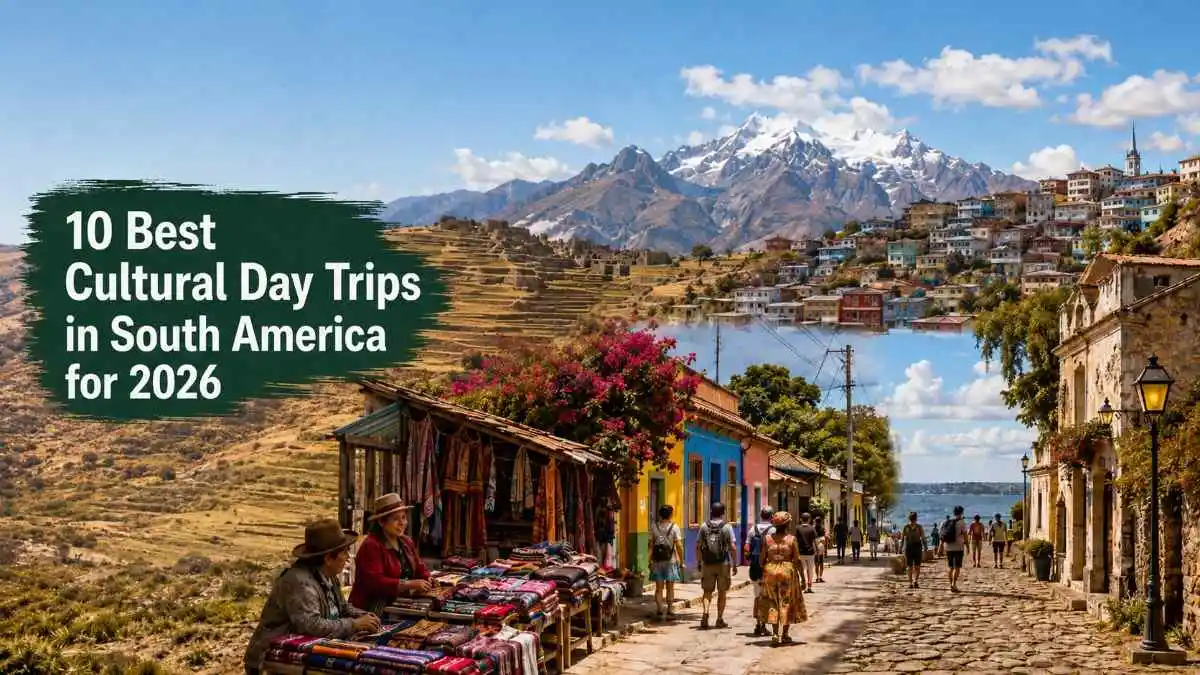
South America has many places where local history, food, language, religion, and family traditions remain part of daily life. Some of the best cultural day trips in South America take you from a busy capital to an Indigenous market, an old port town, an archaeological site, or a small community with its own music and language.
You can take most of these trips from popular travel bases such as Cusco, Cartagena, Quito, Santiago, and Buenos Aires. This guide compares 10 trips by cost, travel time, transport, physical effort, and cultural value. Prices are planning ranges for 2026 and may change by season or booking date.Travellers looking for cheaper options can also compare these budget day trips in South America before choosing their route.
The cheaper options are Otavalo, Valparaíso, and Tiwanaku. Colonia and Palenque usually cost more because of ferry fares or private transport.
1. Sacred Valley from Cusco, Peru

Best for: Inca history and Andean textile traditions
Travel style: Full-day group tour
Physical effort: Moderate
Estimated cost: $45–$90 per person
The Sacred Valley is one of the strongest choices for a first cultural trip from Cusco. A standard tour usually visits Pisac, Ollantaytambo, and Chinchero. Some routes add a market, weaving demonstration, or lunch stop.
Pisac combines an Inca archaeological site with a town known for crafts and market stalls. Ollantaytambo has large stone terraces and old streets that still follow parts of the original Inca town plan. Chinchero is known for weaving, natural dyes, and Quechua traditions.
Most group tours leave Cusco early in the morning and return at about 6:30 or 7:00 p.m. The day is long, so confirm whether your price includes attraction tickets and lunch. Many low advertised prices cover transport and a guide only. Current group tours can start near $28 before entrance fees and meals.If you have another free day in Cusco, this Rainbow Mountain Peru guide explains tour costs, altitude, walking difficulty, and pickup times.
A practical one-day route
- Leave Cusco between 7:00 and 8:00 a.m.
- Visit Pisac archaeological site and town.
- Stop for lunch in Urubamba.
- Spend the afternoon in Ollantaytambo.
- Visit Chinchero if your tour schedule allows.
- Return to Cusco in the evening.
Cultural etiquette
Ask before photographing weavers or market sellers. A demonstration may be included in your tour, though the person giving it may also depend on textile sales. Buy an item only when you genuinely want it.
Carry small Peruvian sol notes. They make it easier to pay for snacks, toilets, crafts, and tips.
2. Uros and Taquile Islands from Puno, Peru

Best for: Community traditions and handmade textiles
Travel style: Organised boat tour
Physical effort: Moderate to high
Estimated cost: $60–$80 per person
A day trip to Uros and Taquile takes you across Lake Titicaca to communities with different histories and ways of life.For more details about Puno, boat routes, island choices, and local costs, read this Lake Titicaca travel guide.
The Uros islands are made from layers of totora reeds. During a visit, residents usually explain how they build and maintain the islands. Some trips include a short ride on a reed boat for an extra fee.
Taquile has a strong textile tradition. Men and women use clothing, hats, belts, and weaving patterns to communicate community roles and family status. UNESCO has recognised Taquile’s textile art as part of the island’s cultural heritage.
Most full-day tours leave Puno at about 7:00 a.m. and return between 4:00 and 5:00 p.m. Current tours start near $55, with lunch included on some packages. Travellers may also pay a small port fee and optional community costs. Handmade textile prices often begin near S/20 and rise with size and detail.
What the day includes
The boat first reaches one or more Uros islands. Visits usually last around 1 hour. The trip then continues to Taquile, where you walk uphill from the dock to the main settlement.
The climb can feel hard because Puno and Lake Titicaca sit at high altitude. Walk slowly, drink water, and carry strong sun protection. Shade is limited on the lake.
Cultural etiquette
Listen to the local explanation before walking around the reed island. Avoid treating homes as photo sets. Ask before taking close pictures of residents, especially children.
Buying directly from registered community stalls sends more money to the makers. Check the weave, size, and price before buying.
3. San Basilio de Palenque from Cartagena, Colombia

Best for: Afro-Colombian history, music, and language
Travel style: Community-led guided tour
Physical effort: Low
Estimated cost: $100–$140 per person
San Basilio de Palenque is around 2 hours from Cartagena. The town has deep links to resistance against slavery and is widely known as the first free African town founded during the colonial period in the Americas.
Palenque has its own Creole language, Palenquero, which residents continue to teach and use. Music, dance, oral history, traditional medicine, hairstyles, and food carry knowledge passed through generations.
A local guide adds needed context to the streets, monuments, music, and community spaces. A standard visit may include a walking tour, a music or dance session, lunch, and time with local residents. Official Colombian tourism material describes Palenque through its living history, ancestral traditions, and music.You can compare Palenque with island, nature, and history trips in this guide to day trips from Cartagena.
Current private and small-group trips commonly fall between $100 and $140 per person, though the final price depends on group size, hotel pickup, meals, and activities.
How to book responsibly
Choose a tour that names its Palenque guide or community partner. Check whether the price includes lunch and payments for performers.
Community-led tours keep more spending inside the town. They also reduce the risk of hearing a simplified version of Palenque’s history from an outside guide.
Cultural etiquette
Ask before filming performances. Some music or dance sessions are arranged for visitors, though they still carry cultural meaning.
Avoid handing money directly to children. Spend at family-run food stalls, craft shops, guide services, or organised community projects.
4. Zipaquirá from Bogotá, Colombia

Best for: Religious art, mining history, and an easy independent trip
Travel style: Public bus or organised tour
Physical effort: Low to moderate
Estimated cost: $35–$60 per person
Zipaquirá is one of the easiest cultural day trips from Bogotá. Its main attraction is the Salt Cathedral, an underground Catholic site built inside old salt mine tunnels.
Visitors walk through dim passages, carved crosses, chapels, and large chambers. The standard visit takes around 1 hour, though you may spend longer if you add the museum or other activities.
The cathedral opens daily, with current visitor hours listed from 9:00 a.m. to 4:40 p.m. Its basic ticket includes the cathedral route, an audio guide, and selected museum access.
How to get there from Bogotá
Public buses leave from Terminal Salitre and Portal Norte. After reaching Zipaquirá, you can walk about 15 minutes to the historic center or take a short taxi ride. Current bus fares are around COP 10,500 to COP 11,500 each way.Zipaquirá is also included in this guide to cheap day trips from Bogotá, with public bus costs and other low-cost places near the capital.
A tour costs more, though it removes the need to change transport. Some tours combine Zipaquirá with Guatavita, which makes the day much longer.
Suggested schedule
Reach Zipaquirá by late morning. Visit the Salt Cathedral, eat lunch near the main square, and spend an hour walking around the old center before returning to Bogotá.
Wear shoes with good grip. Some underground paths feel damp, and the lighting is low in places.
5. Otavalo and Peguche from Quito, Ecuador

Best for: Indigenous crafts, clothing, food, and Kichwa culture
Travel style: Public bus or full-day tour
Physical effort: Low to moderate
Estimated cost: $15–$95 per person
Otavalo is known for its Indigenous market and long history of textile production. Stalls sell woven blankets, ponchos, bags, belts, jewellery, carved goods, and household items.
The market is active throughout the week. The town feels busier on major market days, while quieter days give you more space to speak with sellers.
Many guided trips add Peguche, a nearby Kichwa community known for textile workshops and its waterfall. Some tours also stop in Cotacachi, a town linked to leather goods.
Public transport or tour?
Buses from Quito to Otavalo run regularly. Travel time is around 1.5 to 2 hours each way, with fares commonly between $3 and $6.
A guided tour usually lasts 10 to 11 hours and may include Peguche, Cotacachi, lunch, and hotel pickup. Current shared tours start near $55, with smaller groups costing more.
Independent travel works well for visitors mainly interested in Otavalo. A tour makes more sense when you also want to visit smaller communities and workshops.Travellers spending more time in Ecuador can continue through Andean villages with this Quilotoa Loop guide.
Buying at the market
Ask the price first and negotiate politely. Keep the conversation friendly and accept the final answer when the seller stops lowering the price.
Look at several stalls before buying. Similar items can differ in material, origin, and how much work was completed by hand.
6. Tiwanaku from La Paz, Bolivia

Best for: Archaeology and pre-Inca history
Travel style: Group tour or public minibus
Physical effort: Moderate
Estimated cost: $30–$60 per person
Tiwanaku lies about 72 kilometres west of La Paz. It was once the center of a major civilisation that developed around Lake Titicaca long before the Inca Empire.
The archaeological area contains stone platforms, temple remains, carved figures, and the Gate of the Sun. Several pieces have religious and political meaning, though researchers still debate parts of the site’s history.
UNESCO lists Tiwanaku as the spiritual and political center of the Tiwanaku culture.
Tour and entry costs
Full-day tours from La Paz usually cost around $30 to $50. Foreign visitors currently pay about BOB 100 for the archaeological site and museums.
Public minibuses can cost around BOB 15 to BOB 20 each way. They require more planning and may drop you away from the entrance. Most visitors spend 2 to 3 hours at the site, while a full tour takes 8 to 9 hours including transport.
Why a guide is useful
The site has labels and museum displays, though a good guide can connect the structures, symbols, and timeline.
Bring warm layers. The open site can feel cold and windy, even when La Paz feels mild. Sun exposure is also strong at this altitude.
7. Valparaíso from Santiago, Chile

Valparaíso is known for steep streets, historic lifts, painted walls, and port views.
Best for: Port history, hillside neighbourhoods, and street art
Travel style: Independent bus trip
Physical effort: Moderate to high
Estimated cost: $25–$50 per person
Valparaíso is a historic port city around 1.5 to 2 hours from Santiago. Its steep hills, old lifts, stairways, painted walls, and sea views make it different from the Chilean capital.
The historic quarter is a UNESCO World Heritage Site. Cerro Alegre and Cerro Concepción contain many of the city’s best-known lanes, murals, viewpoints, small galleries, and restored buildings. Historic funiculars connect parts of the lower city with the hills.
A simple day plan
Take an early bus from Santiago. From the Valparaíso terminal, use local transport or a registered taxi to reach the historic center.
Walk around Cerro Alegre and Cerro Concepción in the morning. Ride one of the working funiculars, eat lunch, then visit a museum or continue through the old port area.
La Sebastiana, one of Pablo Neruda’s former homes, can fit into the afternoon if you book enough time. Return to Santiago before late evening.
Safety and practical advice
Valparaíso has steep streets and uneven steps. Wear firm shoes and carry water.
Keep your phone and wallet secure in crowded transport areas. Use a taxi or ride app when moving between distant neighbourhoods, especially after dark.
8. Colonia del Sacramento from Buenos Aires, Argentina

Best for: Colonial history and a relaxed walking day
Travel style: International ferry
Physical effort: Low
Estimated cost: $90–$180 per person
Colonia del Sacramento sits across the Río de la Plata in Uruguay. Its historic quarter has stone lanes, old houses, small museums, a lighthouse, and remains from Spanish and Portuguese rule.
UNESCO lists Colonia’s historic quarter as a World Heritage Site because of its preserved town plan and mix of Portuguese and Spanish architecture.
Ferry planning
Fast ferries from Buenos Aires take about 1 hour and 15 minutes to 1.5 hours. One-way fares can start near $53, though weekend and late-booking prices may rise a great deal.
Book an early departure and a late-afternoon or evening return. Ferry companies ask passengers to arrive well before departure because the route crosses an international border.
Carry the passport or travel document required for your nationality. Complete any entry forms requested by Argentina or Uruguay before travel.
What to do in Colonia
Begin at the old city gate and walk through the historic quarter. Visit the lighthouse area, small museums, and the riverside path.
The center is compact, so you can see the main streets without a tour. A local walking guide is useful for learning how control of the town passed between Portuguese and Spanish forces.
9. Petrópolis from Rio de Janeiro, Brazil

Best for: Brazilian imperial history
Travel style: Public bus or guided tour
Physical effort: Low
Estimated cost: $30–$120 per person
Petrópolis sits in the hills north of Rio de Janeiro. The city became closely linked to Brazil’s imperial family during the 19th century.
The Imperial Museum occupies the former summer palace of Emperor Pedro II. Its rooms contain furniture, clothing, paintings, documents, and objects linked to the monarchy.
Other stops include the Cathedral of Saint Peter of Alcantara, the Crystal Palace, and historic homes near the center.
Transport from Rio
Direct buses from Rio usually take around 1 to 1.5 hours. Current one-way fares commonly fall between R$35 and R$50.
Guided tours last about 9 hours and may include transport, the Imperial Museum, the cathedral, the Crystal Palace, and lunch stops. Current tour prices can start near $94.
Independent day plan
Take a morning bus and walk or use local transport from the Petrópolis station to the historic center.
Visit the Imperial Museum early, since entry times may sell out during busy weekends. Continue to the cathedral and Crystal Palace, eat lunch, then return to Rio before evening traffic becomes heavy.
Check museum closure days before leaving Rio. Some cultural buildings close on Monday.
10. Cachoeira and the Recôncavo from Salvador, Brazil

Best for: Afro-Brazilian history, religion, food, and community traditions
Travel style: Guided full-day tour
Physical effort: Low
Estimated cost: $90–$170 per person
Cachoeira lies in Bahia’s Recôncavo region, inland from Salvador. The area played a major part in Brazil’s sugar, tobacco, slavery, religious, and independence history.
Afro-Brazilian traditions remain strong here. Local churches, Candomblé communities, family food businesses, music, and religious groups connect the town’s past with present-day life.
Many tours stop in Santo Amaro before reaching Cachoeira. A typical day may include a market, historic streets, churches, lunch, and a visit linked to local tobacco production.
Some routes discuss the Sisterhood of Our Lady of the Good Death, a religious group formed by Black women whose traditions combine Catholic and African beliefs.
Why a tour works better
Public transport is possible, though coordinating several stops in one day takes time. A guided trip usually includes hotel pickup, transport, lunch, entrance fees, and a local guide.
Most tours leave Salvador around 7:30 a.m. and return near 5:00 p.m. Prices depend heavily on group size and whether the booking is private.
Cultural etiquette
Ask your guide about photography inside religious spaces. Some ceremonies, objects, and rooms have rules that visitors should follow.
Dress with respect when entering churches or community religious sites. Speak quietly and wait for permission before filming people.
How to choose the right cultural day trip
Your best choice depends on where you are staying and how much travel time feels comfortable.
Choose Sacred Valley or Tiwanaku for archaeology. Both trips involve altitude, outdoor walking, and long hours in transport.
Choose Palenque or Cachoeira for African and Afro-descendant history. A community guide matters on both trips because many parts of the story come through language, music, faith, food, and oral history.
Choose Otavalo or Taquile for textile traditions. Buy directly from makers when possible and ask how the item was produced.
Choose Valparaíso, Colonia, or Petrópolis for architecture and city history. These trips require less organised activity and give you more control over your schedule.
Zipaquirá works well for travellers with limited time in Bogotá. You can complete the trip independently and return before dinner.
Cultural day trip costs to plan for
The advertised ticket or tour price rarely covers every expense. Your daily budget may also include:
- Bus, ferry, or hotel pickup
- Attraction entrance tickets
- Lunch and drinking water
- Local guide fees
- Port, terminal, or border charges
- Tips
- Toilets and small purchases
- Community activities or demonstrations
Carry a small emergency amount in local currency. Card machines can fail in markets, villages, ports, and archaeological areas.If Bogotá is part of your route, this Bogotá cost per day guide can help you estimate meals, local transport, accommodation, and paid attractions.
For Colonia, book the ferry early because the fare can rise sharply. For Cusco tours, check whether archaeological tickets are included. In Palenque and Cachoeira, confirm how the tour pays local guides and performers.
How to visit local communities respectfully
Ask before taking close photographs. A market stall, home, workshop, religious space, or traditional outfit does not give automatic permission.
Use local guides for places where oral history carries much of the story. This is especially useful in Palenque, Cachoeira, Taquile, and smaller Kichwa communities near Otavalo.
Pay the agreed price for demonstrations or activities. Keep bargaining polite in markets. A small price difference may matter more to the maker than it does to your daily travel budget.
Learn the correct name of the community and language before your visit. Terms such as Quechua, Kichwa, Palenquero, Aymara, and Afro-Brazilian describe different people and traditions. Use the name residents use for themselves.
What to carry
Pack light, though prepare for weather changes and long transport days.
Bring:
- Passport for the Colonia ferry
- Local cash in small notes
- Water and a simple snack
- Sunblock, sunglasses, and a hat
- A light rain jacket
- Comfortable walking shoes
- Warm layers for Tiwanaku and Lake Titicaca
- A small bag that closes securely
- Any altitude medicine prescribed by your doctor
Download an offline map before leaving your hotel. Mobile service can weaken outside major cities.For Sacred Valley and Lake Titicaca weather, compare travel months in this guide to the best time to visit Peru.
Are cultural day trips in South America worth it?
A good cultural day trip gives you enough time to learn where you are, speak with local people, and spend money outside the main tourist district. Sacred Valley, Palenque, Otavalo, Tiwanaku, and Cachoeira are especially useful for travellers who want history connected to living communities.
Choose fewer stops when your schedule allows. A slower visit with a knowledgeable local guide often gives you more useful detail than a rushed tour covering several towns. Check current transport times, entrance rules, and prices before leaving, then give the place enough time once you arrive.


