


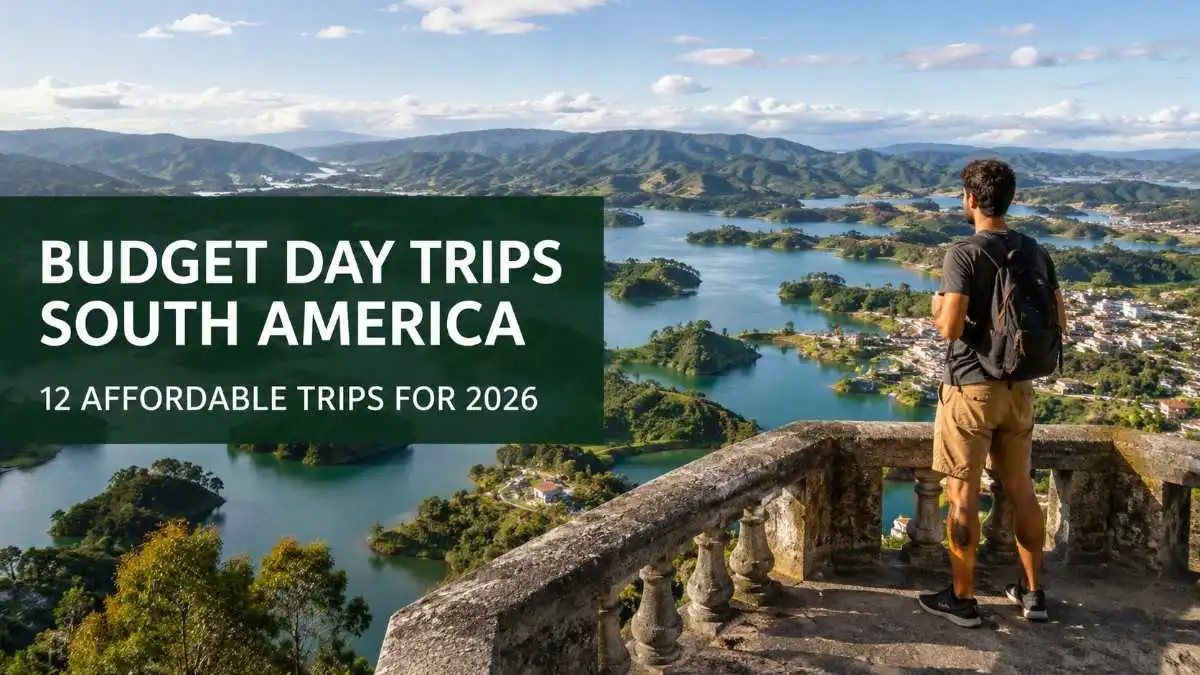
South America has many day trips that fit a small travel budget. You can visit crater lakes, historic towns, beaches, mountain villages, and major ruins without paying for another hotel night.
The best budget day trips South America travelers can plan usually start near a major city. Public buses, trains, ferries, and shared vans keep costs low. A good day trip also has a clear return route, so you are not forced to pay for a costly taxi late in the day.
The prices below were checked in July 2026. Local fares and exchange rates can change, so use the local-currency figures as your main guide.
1. Guatapé from Medellín, Colombia

Guatapé is one of the easiest low-cost trips from Medellín. The town is known for painted wall panels called zócalos, bright streets, and a large reservoir surrounded by green hills.
Buses leave Medellín’s Terminal del Norte and usually take about 2 hours. A one-way ticket often costs close to COP 25,000. Piedra del Peñol had a COP 35,000 entry fee in 2026, so a full day with return buses, entry, and food usually costs COP 105,000 to COP 160,000.
Low-cost plan
Take an early bus and get off near Piedra del Peñol. Climb the rock before midday, then continue to Guatapé by tuk-tuk or local transport. Spend the afternoon walking through the town and return to Medellín before evening.
The boat tours raise the cost fast. The rock and town already fill a full day, so a boat is easy to skip on a tight budget.
Best for: First-time visitors, photographers, couples, and travelers who want a simple trip with regular buses.
2. Zipaquirá from Bogotá, Colombia
Zipaquirá is a practical day trip for history and architecture. Its main sight is the Salt Cathedral, an underground church built inside former salt-mine tunnels.
Public buses run from Bogotá through Portal Norte, and services also leave the Salitre transport terminal. The cathedral opens daily, with visitor entry generally available from 9:00 a.m. until late afternoon. Ticket prices vary by visitor category and package, so check the current total before leaving Bogotá.
Plan about $42 to $63 for return transport, the standard international ticket, and lunch. The cathedral is the main cost. Walking around Zipaquirá’s central square is free.
Leave Bogotá early because traffic can make the return trip much longer. Our cheap day trips from Bogotá guide has more ideas that use public transport.
Best for: Rainy days, families, history fans, and travelers who prefer an indoor main sight.
3. Tierra Bomba from Cartagena, Colombia

Tierra Bomba gives you a Caribbean beach day close to Cartagena. Boats from the city can reach the island in about 15 minutes, so you spend less time in transit than on most island trips.
A basic local visit can stay near COP 80,000 to COP 120,000 if you pay for transport, food, and a simple beach setup. Day passes with return boats, lunch, chairs, pools, or beach-club access often raise the total to COP 150,000 to COP 300,000.
Ask for the full price before boarding. Confirm the return time, return point, lunch, chair, and any port fee. Keep the written booking message or receipt until you are back in Cartagena.
Our day trips from Cartagena guide compares more beach and island choices, including trips that need a larger budget.
Best for: A short beach break, warm water, and travelers with limited time in Cartagena.
4. Rainbow Mountain from Cusco, Peru

Rainbow Mountain is a long day with an early start. Most group trips leave Cusco between 3:00 a.m. and 5:00 a.m., drive for several hours, and include breakfast, lunch, and transport to the trail area.
Budget group tours often cost about S/100 to S/175. Entry fees, small local charges, water, snacks, and optional horse transport can raise the full total to S/200 or more. The mountain sits at about 5,036 metres, so altitude is the main planning issue. Spend at least 2 days in Cusco before this trip.
A tour can cost less than a self-planned trip here because transport is shared and the trailhead is far from Cusco. Read our Rainbow Mountain Peru guide for altitude advice, packing, weather, and current cost details.
Carry cash in small notes. Local entry points and horse operators may not accept cards.
Best for: Fit travelers who have adjusted to Cusco’s altitude and can handle a long day.
5. Pachacamac from Lima, Peru
Pachacamac is one of the lowest-cost cultural trips from Lima. The archaeological site has temples, adobe buildings, plazas, and a museum that explains the area’s long religious history.
The standard adult entry fee is S/15. The site opens Tuesday to Saturday from 9:00 a.m. to 5:00 p.m. and Sunday from 9:00 a.m. to 4:00 p.m. A guide costs extra, and public transport takes longer than a taxi or app ride.
Plan S/35 to S/80 for public transport, entry, water, and a simple meal. Start early and avoid the strongest midday sun because much of the site is open and dry.
This trip fits well into a longer stay in the capital. Our Lima daily budget guide can help you plan the rest of your spending.
Best for: Archaeology fans, solo travelers, and anyone seeking a low-cost break from central Lima.
6. Quilotoa from Latacunga or Quito, Ecuador

Quilotoa is a deep volcanic crater filled with blue-green water. The rim has wide Andes views, and a steep path leads down toward the lake.
Latacunga is the better budget base for a day trip. Travelers starting in Quito need an early bus to Latacunga, followed by another bus toward Quilotoa. The Quito to Latacunga bus usually costs about $3 to $4, and there is no regular direct bus for the full route. Community access at Quilotoa has commonly cost about $2.
A day from Latacunga may cost $18 to $30. From Quito, allow $25 to $40 and more travel time. Check the last return bus as soon as you arrive.
The climb back from the lake is steep and can take much longer than the walk down. Stay at the rim when clouds, rain, low fitness, or altitude make the descent unsafe. Our Quilotoa Loop guide covers the longer hiking route.
Best for: Mountain views, short hikes, and travelers already staying in Latacunga.
7. Tiwanaku from La Paz, Bolivia
Tiwanaku is an ancient archaeological site west of La Paz. Visitors can see large stone gateways, temple remains, carved figures, and museum collections linked to a major Andean culture.
The site lists a BOB 100 foreign visitor ticket and opens from 9:00 a.m. to 4:00 p.m. Shared minibuses from La Paz can cost around BOB 7 each way, though local prices and departure points may change.
Allow BOB 125 to BOB 180 for transport, entry, lunch, and small local costs. Bring cash and leave enough time for both museums before the site closes.
Tiwanaku pairs well with a later trip to Puno or Lake Titicaca. Our Lake Titicaca travel guide covers island visits, costs, and transport on the Peru side.
Best for: History fans, museum visitors, and travelers seeking strong value near La Paz.
8. Tigre from Buenos Aires, Argentina
Tigre is a river town north of Buenos Aires. Its canals, waterfront paths, market area, and relaxed centre make it an easy break from the capital.
The train from Retiro takes about 50 minutes. In May 2026, the one-way fare with a registered SUBE card was around ARS 450. Argentine prices can change often, so check the fare shortly before travel.
A walking day with train tickets and food can stay under $15. A public or shared boat ride may bring the total closer to $20 to $30. Private boats and tourist services from central Buenos Aires cost much more.
Walk along the waterfront, visit the market area, and add one short boat ride when the price fits your budget. Keep enough credit on your SUBE card for the return train.
Best for: An easy train trip, river views, markets, and travelers avoiding a full-day tour.
9. Valparaíso from Santiago, Chile

Valparaíso is a coastal city built across steep hills. Painted walls, old lifts, sea views, and hillside streets give the city a very different feel from Santiago.
A return intercity bus from Santiago often costs about $16 to $24. Local transport, a few lift rides, lunch, and small entry costs can bring the full day to about $31 to $51.
Start near the lower city, then choose 1 or 2 hill areas instead of trying to cover every viewpoint. Cerro Alegre and Cerro Concepción are common choices. Use working lifts where possible because the climbs are steep.
Keep your phone and wallet secure in crowded transport areas. Return before late evening unless you already know the bus station route.
Best for: Street art, coastal views, urban walks, and travelers who enjoy exploring on foot.
10. Cajón del Maipo from Santiago, Chile
Cajón del Maipo is a mountain area east of Santiago. The budget depends on how far you plan to go.
Public transport can reach San José de Maipo for about CLP 3,000 to CLP 4,000 each way. Local shared transport can add CLP 3,000 to CLP 5,000. Trips deeper into the valley, including Embalse El Yeso, often need a tour or arranged vehicle. Basic tours can start near CLP 25,000, with many full-day choices costing more.
For a low-cost day, visit San José de Maipo, eat in town, and take a short local walk. Set a CLP 15,000 to CLP 25,000 budget. A full reservoir trip may cost CLP 35,000 to CLP 50,000 or more.
Check weather and road conditions before leaving. Snow, rain, and road closures can change access. Our budget hiking destinations in South America guide has more low-cost mountain ideas.
Best for: Mountain air, short walks, and travelers who can adjust the route to the season.
11. Niterói from Rio de Janeiro, Brazil
Niterói is across Guanabara Bay from Rio de Janeiro. The ferry ride gives you broad city and bay views for the cost of local transport.
The ferry between Praça XV and Arariboia had a R$5 fare in 2026. The Contemporary Art Museum charged R$20 for full entry, R$10 for reduced entry, and free entry on Wednesdays.
A simple day can cost R$30 to R$90. That covers return ferries, the museum, local bus fares, and basic food. Wednesday is the cheapest museum day.
Visit the museum, walk around the waterfront, and return by ferry before the busiest evening period. Beaches farther from the ferry terminal need more transport time and money.
Best for: A very small budget, modern architecture, bay views, and a short trip from central Rio.
12. Iguazú Falls from Puerto Iguazú or Foz do Iguaçu

Iguazú Falls is the most expensive trip on this list, though it can still fit a budget itinerary when you stay close to the park.
On the Argentina side, the general foreign visitor ticket rose to ARS 60,000 from June 1, 2026. The ticket includes access to the main open circuits and the park’s ecological train. Transport and food raise the final cost.
Plan about $45 to $70 for one side of the falls. Carry water, pack snacks where park rules allow, and skip paid boat rides when keeping costs down. For entry fees, transport, and help choosing between the Argentina and Brazil sides, read our Iguazu Falls travel guide.
Choose one national-park side for a single day. Crossing the international border can take extra time, and entry rules depend on your passport. A 2-day plan is better for seeing both Argentina and Brazil.
Best for: A major natural sight and travelers who can spend more for one memorable day.
3 sample day-trip budgets
Under $20
Choose Niterói, Pachacamac, or a walking day in Tigre.
Your money can cover public transport, one entry ticket, and a simple meal. Wednesday makes Niterói cheaper because museum entry is free.
$20 to $40
Choose Guatapé without a boat tour, Quilotoa from Latacunga, Tiwanaku, or Cajón del Maipo near San José de Maipo.
This range works best when you start close to the destination and use public transport.
$40 to $70
Choose Zipaquirá, Rainbow Mountain, Iguazú Falls, Valparaíso, or an organized trip deeper into Cajón del Maipo.
Entry fees and remote transport cause most of the higher cost. Booking early can give you more choices, though the lowest fare may exclude food or tickets.


