
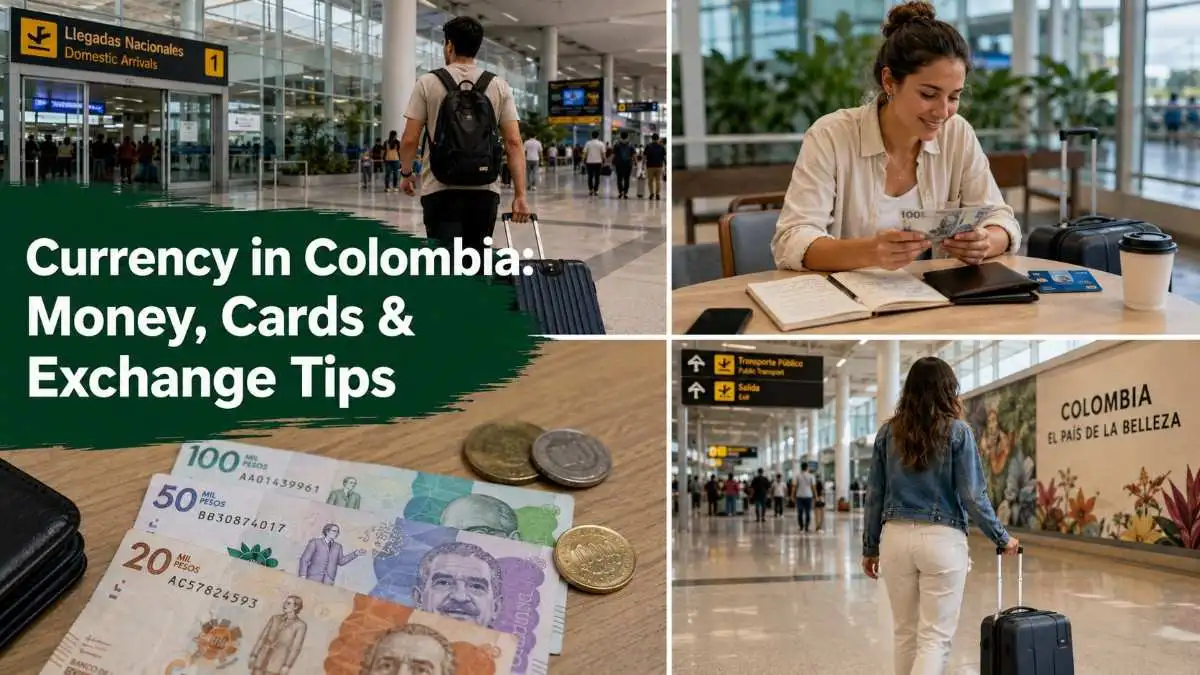
Currency in Colombia is the Colombian peso, written as COP. If you are visiting Bogotá, Cartagena, Medellín, the Coffee Region, Tayrona, or small towns, you will use pesos for almost everything.
The money system is easy once you understand one thing: Colombia uses the same $ sign that many people use for US dollars. A price tag that says $20,000 in Colombia usually means 20,000 Colombian pesos, not 20,000 US dollars.
That small detail can confuse first-time visitors. It confused me too at the start, especially when restaurant menus and taxi fares showed large numbers.
Here’s the simple rule: always read Colombian prices as pesos unless the business clearly says USD.
Quick answer: what money should you use in Colombia?
Colombia uses the Colombian peso. The currency code is COP.
Cards work well in big cities, hotels, malls, supermarkets, and many restaurants. Cash is still needed for street food, buses, local taxis, markets, small shops, beach towns, tips, and rural areas.
For most visitors, the best money plan is simple:
| Money question | Best answer |
|---|---|
| Local currency | Colombian peso |
| Currency code | COP |
| Symbol used in Colombia | $ |
| Best money option | Mix of card and cash |
| Best place to get pesos | ATM in Colombia |
| Should you bring USD? | Bring a small backup amount only |
| Can you pay in USD? | Rarely, and usually at a poor rate |
| Best card tip | Always pay in COP |
| Cash to carry daily | COP 100,000 to 250,000 for normal city use |
If you are still planning the full trip, check my Colombia Visa Requirements guide before booking flights. Entry rules and money planning go together, especially if you need proof of funds.
What is the currency in Colombia?

The official currency in Colombia is the Colombian peso.
You will see it written in a few ways:
| Format | Meaning |
|---|---|
| COP | Colombian peso currency code |
| $ | Peso symbol used inside Colombia |
| COL$ | Colombian peso, used to avoid confusion |
| COP$ | Colombian peso, also used online |
| pesos | The normal word people use |
A café menu may show coffee as $6,000. That means COP 6,000.
A hotel may show a room as COP 180,000. That means 180,000 Colombian pesos.
A tour company may write COL$120,000. That also means Colombian pesos.
Colombian peso exchange rate in 2026
Exchange rates change every day, so check the live rate before you travel.
On June 26, 2026, 1 USD was about COP 3,435. That means:
| USD | Approx. COP |
|---|---|
| $1 | COP 3,435 |
| $10 | COP 34,350 |
| $20 | COP 68,700 |
| $50 | COP 171,750 |
| $100 | COP 343,500 |
Use these numbers as a rough guide. Your bank, ATM, card network, or exchange office may give a slightly different rate.
Here’s the thing: the rate you see on Google or a currency app is usually the mid-market rate. The rate you get at an airport exchange desk, hotel, or small currency booth may be lower.
How to read Colombian prices without getting confused

Colombian prices look large because the peso has many zeros.
COP 10,000 is not expensive. It is only a few US dollars.
A quick way to think:
| Colombian price | Rough USD value |
|---|---|
| COP 5,000 | About $1.50 |
| COP 10,000 | About $3 |
| COP 20,000 | About $6 |
| COP 50,000 | About $15 |
| COP 100,000 | About $29 |
| COP 200,000 | About $58 |
The exact value changes with the exchange rate. This table is only for quick thinking while you travel.
Many travelers mentally round COP 3,500 to $1. It makes street prices easier to judge. If your South America trip also includes Peru, my Currency in Peru guide can help you compare soles and pesos before crossing countries.
Colombian banknotes and coins
Colombia uses banknotes and coins.
Common banknotes include:
| Banknote | Common use |
|---|---|
| COP 2,000 | Small snacks, bus fares, tips |
| COP 5,000 | Coffee, small food, short taxi add-ons |
| COP 10,000 | Street food, small meals |
| COP 20,000 | Casual restaurants, short rides |
| COP 50,000 | Tours, hotel payments, bigger meals |
| COP 100,000 | Larger payments, harder to break in small shops |
Common coins include:
| Coin | Common use |
|---|---|
| COP 50 | Rarely useful for tourists |
| COP 100 | Small change |
| COP 200 | Small change |
| COP 500 | Snacks, small tips |
| COP 1,000 | Street food, buses, tips |
Try to keep small notes. A COP 100,000 note can be hard to use for a COP 6,000 coffee or a COP 12,000 taxi ride.
If an ATM gives you large notes, break them at a supermarket, pharmacy, or chain café. Small vendors may not have enough change.
Cash or card in Colombia: which is better?

Use both.
Cards are easier in cities. Cash is better for small daily spending.
In Bogotá, Medellín, Cartagena, and other tourist areas, you can often pay by card at hotels, larger restaurants, supermarkets, malls, museums, and many tour offices.
Cash is still useful for:
- Street food
- Local buses
- Small taxis
- Markets
- Tips
- Beach chairs
- Public toilets
- Small shops
- Rural towns
- Hostels that charge extra for card payments
- Day trips where signal is weak
If you are staying in Bogotá first, my Bogotá Airport to City guide can help you plan your first cash needs after landing.
Can you use US dollars in Colombia?
You should use Colombian pesos in Colombia.
Some hotels, private tour companies, or airport services may accept US dollars, especially in tourist areas. The rate is often worse than the real exchange rate.
Small restaurants, taxis, buses, markets, and street vendors usually want pesos.
Bring a small amount of USD as backup if you want. Fresh, clean bills are easier to exchange. Torn, marked, or old-looking notes may be rejected.
For daily spending, pesos are the right choice.
Should you exchange money before arriving in Colombia?
You do not need to exchange all your money before arriving.
In many cases, you get a better rate by using an ATM in Colombia with a good travel card. You can also exchange USD or euros at banks and official exchange offices.
If your home country has poor access to Colombian pesos, don’t stress. Bring a card and a small amount of backup cash.
A smart first-day plan:
- Carry a little USD or euros as emergency cash.
- Withdraw pesos from an ATM at the airport or in the city.
- Use your card for hotel and larger payments.
- Keep small cash for taxis, snacks, and tips.
If your first stop is Cartagena, my Cartagena Airport to City guide can help you plan how much cash you may need when you arrive.
Should you exchange money at the airport?
Airport exchange counters are easy, but the rate is often poor.
If you need pesos for a taxi, SIM card, snack, or bus, exchange a small amount only. COP 100,000 to 200,000 is usually enough for your first few hours.
After that, use an ATM or a trusted exchange office in the city.
Airport ATMs can also work, but check the screen before accepting the fee. If the ATM asks whether you want to be charged in your home currency or COP, choose COP. If you also need mobile data on arrival, my SIM Card in Colombia guide can help you compare airport and city options
Best way to get Colombian pesos

The easiest way to get Colombian pesos is to withdraw cash from an ATM in Colombia.
Use ATMs inside:
- Banks
- Malls
- Airports
- Large supermarkets
- Secure shopping areas
Avoid lonely street ATMs at night. Also avoid anyone who tries to “help” you at an ATM.
Before you travel, check these things with your bank:
- Foreign ATM fee
- Foreign transaction fee
- Daily withdrawal limit
- Whether your card works in Colombia
- Emergency card replacement options
- Travel notice settings in your banking app
If your bank charges high fees, take out a larger amount fewer times. Keep the extra cash hidden in your hotel safe or locked bag.
ATM fees in Colombia
ATM fees in Colombia vary by bank and card.
You may pay:
- A fee from the Colombian ATM
- A fee from your home bank
- A currency conversion fee
- A poor exchange rate if you accept conversion on the ATM screen
The ATM should show the local fee before you confirm. Read the screen slowly.
The best rule is this: withdraw in COP and reject the ATM’s currency conversion if it gives you that choice.
This is called dynamic currency conversion. It usually gives a worse rate.
Card payments in Colombia

Visa and Mastercard work in many tourist areas. American Express may work in some hotels and higher-end restaurants, but it is less useful for daily travel.
A card is helpful for:
- Hotels
- Flights
- Long-distance buses
- Restaurants
- Supermarkets
- Malls
- Museum tickets
- Tours booked online
Ask before ordering if you are in a small restaurant or café. Some places accept card, some places have a card minimum, and some charge extra for card payments.
You may hear this question: “¿Débito o crédito?” It means debit or credit.
You may also be asked for ID when paying by card, especially for larger payments. Carry a copy of your passport and keep the real passport safe unless you need it.
Always pay in Colombian pesos
When a card machine asks if you want to pay in your home currency or COP, choose COP.
The same rule applies at ATMs.
Paying in your home currency may look easier, but the machine often uses a worse exchange rate. Your own bank or card network usually gives a better rate when you pay in local currency.
So if the machine gives these options:
- Pay in USD
- Pay in COP
Choose COP.
How much cash should you carry in Colombia?
Carry enough cash for the day, plus a small backup amount.
For a normal day in a city, COP 100,000 to 250,000 is enough for many budget travelers. That covers local transport, snacks, a casual meal, tips, and a small emergency.
If you are taking a day trip, going to a beach, or visiting a rural area, carry more cash.
A simple guide:
| Travel style | Daily cash to carry |
|---|---|
| Budget city day | COP 80,000 to 150,000 |
| Normal tourist day | COP 150,000 to 250,000 |
| Day trip or beach day | COP 200,000 to 400,000 |
| Rural area or park visit | COP 250,000 to 500,000 |
Do not carry all your trip money in your wallet. Split it.
Keep one card in your wallet and one backup card in your bag or hotel safe.
Sample Colombia travel costs in pesos
Prices vary by city and season. Cartagena can cost more than Bogotá in tourist zones. Small towns can feel cheaper, especially for food and local transport.
Here are rough 2026 travel prices:
| Item | Rough cost in COP |
|---|---|
| Street snack | COP 3,000 to 10,000 |
| Coffee | COP 4,000 to 9,000 |
| Casual local meal | COP 15,000 to 35,000 |
| Restaurant meal in tourist area | COP 35,000 to 80,000 |
| Short taxi or app ride | COP 10,000 to 30,000 |
| Local bus ride | COP 3,000 to 5,000 |
| Hostel dorm bed | COP 35,000 to 80,000 |
| Budget private room | COP 90,000 to 180,000 |
| Museum ticket | COP 8,000 to 30,000 |
| Day tour | COP 80,000 to 300,000+ |
If you are building a Bogotá budget, my Bogotá Cost Per Day guide gives a more detailed city breakdown.
Is Colombia cheap or expensive for tourists?
Colombia can be budget-friendly if you eat local food, use public transport, choose simple stays, and avoid overpriced tourist streets.
Your costs rise fast if you take private tours, stay in boutique hotels, eat in tourist restaurants every day, or visit during peak season.
Bogotá often feels better for budget travelers than Cartagena’s most touristy areas. Medellín can sit somewhere in the middle, depending on the neighborhood. The Coffee Region can be affordable if you use local transport and stay in guesthouses.
If prices in the capital are your main concern, read my Is Bogotá Expensive guide before planning your daily budget.
Money tips for Bogotá
Bogotá is one of the easiest places in Colombia for card payments. Hotels, malls, supermarkets, and many restaurants accept cards.
Still, keep cash for:
- Small cafés
- Street food
- Local buses
- Tips
- Markets
- Short rides
La Candelaria is popular with first-time visitors, but you should avoid flashing cash, jewelry, cameras, or your phone. Use ATMs inside banks or malls.
If you are staying in the old town, break large notes early in the day. Small shops may struggle with COP 100,000 notes.
Money tips for Cartagena
Cartagena’s historic center and Bocagrande are more tourist-focused, so cards work in many places.
Cash still matters for:
- Beach vendors
- Taxis
- Street snacks
- Small cafés
- Boat trips
- Tips
- Local buses
Prices in Cartagena’s tourist zones can be higher than in many other parts of Colombia. Ask the price before taking a taxi, buying from a beach seller, or agreeing to a service.
If you are staying near the old city, keep small notes. COP 10,000 and COP 20,000 notes are very useful.
Money tips for Medellín
Medellín is easy for card payments in areas like El Poblado, Laureles, malls, supermarkets, and larger restaurants.
Cash helps in local markets, small food spots, buses, and day trips.
If you use the metro, keep small cash ready. If you use ride apps, card payment may work, but cash can be useful if the app has issues.
Money tips for the Coffee Region
The Coffee Region has many towns where cash is still useful.
In Salento, Filandia, and small coffee farms, keep enough pesos for food, jeep rides, farm tours, tips, and small shops.
ATMs may run out of cash on busy weekends or holidays. Withdraw money before heading into smaller towns.
If you plan to visit Cocora Valley, read my Cocora Valley Colombia Guide and carry enough cash for transport, entry fees, snacks, and local food.
Money tips for Tayrona National Park
Tayrona is a place where cash planning matters.
You may need cash for local transport, food, beach services, lockers, and small vendors. Card access can be limited inside and near park areas.
Withdraw money before going. Santa Marta is a better place to get cash than waiting until the last minute near the park.
My Tayrona National Park Guide can help you plan what to bring before you go.
Tipping in Colombia
Tipping in Colombia is simple.
Many restaurants ask if you want to include service. You may hear: “¿Desea incluir el servicio?” This means: “Do you want to include the service?”
The service charge is often around 10%. You can say yes if service was fine.
For small local restaurants, cafés, taxis, and street food, tipping is optional. Rounding up is fine.
Useful tipping amounts:
| Situation | Tip idea |
|---|---|
| Restaurant with service charge | 10% if you agree |
| Café | Round up or COP 1,000 to 3,000 |
| Taxi | Round up if helpful |
| Tour guide | COP 10,000 to 30,000+ |
| Hotel porter | COP 2,000 to 5,000 per bag |
| Housekeeping | COP 5,000 to 10,000 per day |
Keep small notes for tips. It feels awkward to tip with a large note and ask for change.
VAT refund for foreign tourists in Colombia
Foreign tourists may be able to request a VAT refund on some goods bought in Colombia.
This does not apply to every purchase. You need the correct invoice, and the goods may need to leave the country with you.
Ask for an electronic invoice when you buy higher-value goods. A basic printed receipt may not be enough.
The refund is paid in Colombian pesos to the foreign credit card registered in the request.
This process is more useful for shopping than for food, hotels, taxis, or daily travel costs. If you are only buying meals and tours, it may not matter much.
Should you carry a money belt in Colombia?

You do not need to walk around with all your money hidden under your clothes every day.
A simple system works better:
- Carry one day’s cash in your wallet
- Keep extra cash separate
- Keep one backup card away from your main wallet
- Use a crossbody bag in busy areas
- Avoid counting cash in public
- Use ATMs in safe indoor places
- Put your phone away after checking maps
Pickpocketing can happen in busy areas, buses, markets, nightlife streets, and crowded tourist spots. The risk goes down when you carry less and stay aware.
Common money mistakes in Colombia
Reading $ as US dollars
The $ sign in Colombia usually means Colombian pesos. Always check whether the price says COP, COL$, or USD.
Carrying only large notes
A COP 100,000 note is useful for hotels or tours. It is annoying for small purchases. Keep COP 2,000, 5,000, 10,000, and 20,000 notes.
Paying in your home currency
Choose COP on card machines and ATMs. Your home currency option often gives a worse rate.
Exchanging money on the street
Use banks, ATMs, and official exchange offices. Street exchange can lead to scams, fake notes, or bad rates.
Depending only on cards
Cards are useful in cities. Cash is still needed in many places.
Withdrawing money late at night
Use indoor ATMs during the day when possible. Malls, banks, and supermarkets are better than quiet street ATMs.
Forgetting bank fees
A good exchange rate can still cost more if your bank charges high foreign fees. Check your card fees before leaving.
Useful Spanish money phrases
These phrases help in Colombia:
| Spanish | Meaning |
|---|---|
| ¿Cuánto cuesta? | How much does it cost? |
| ¿Aceptan tarjeta? | Do you accept card? |
| ¿Puedo pagar en efectivo? | Can I pay in cash? |
| ¿Tiene cambio? | Do you have change? |
| ¿Me puede dar recibo? | Can you give me a receipt? |
| ¿Desea incluir el servicio? | Do you want to include the service charge? |
| En pesos, por favor | In pesos, please |
| Débito | Debit |
| Crédito | Credit |
| Cajero automático | ATM |
| Casa de cambio | Exchange office |
How much money do you need for 1 week in Colombia?
A budget traveler can spend around COP 1,400,000 to 2,450,000 for 1 week, excluding international flights. That is around COP 200,000 to 350,000 per day.
A mid-range traveler may spend around COP 3,150,000 to 5,600,000 for 1 week. That is around COP 450,000 to 800,000 per day.
A comfort-focused traveler can spend more, especially in Cartagena, private tours, boutique hotels, or domestic flights. If you plan to visit Peru after Colombia, read my Peru Visa Requirements guide before booking the next part of your trip.
Here is a simple weekly guide:
| Travel style | 1-week estimate |
|---|---|
| Budget | COP 1,400,000 to 2,450,000 |
| Mid-range | COP 3,150,000 to 5,600,000 |
| Higher comfort | COP 6,000,000+ |
These estimates depend on your route. A week in Bogotá and the Coffee Region can cost less than a week in Cartagena with beach clubs and private boat trips.
If your trip dates are flexible, my Best Time to Visit Colombia guide can help you avoid the most expensive weeks.
Should you use Wise, Revolut, Monzo, or travel cards in Colombia?
Travel cards can work well in Colombia if they give fair exchange rates and low foreign fees.
Before relying on one card, check:
- ATM withdrawal limits
- Free withdrawal allowance
- Weekend exchange rate rules
- Replacement card options
- App access while abroad
- Support if the card gets blocked
Carry more than one card. A card can fail for normal reasons: bank security blocks, damaged chip, ATM issue, poor signal, or merchant machine problems.
A backup card can save you a lot of stress.
Are ATMs safe in Colombia?
ATMs are safest when you use them in the right places.
Use ATMs inside banks, malls, airports, and supermarkets. Avoid quiet street ATMs, especially at night.
Cover your PIN. Put the money away before leaving the ATM area. Do not accept help from strangers.
If the ATM keeps your card, contact the bank or your card provider. Do not leave your banking app open in public.
Is contactless payment common in Colombia?
Contactless card payment is common in many city businesses. You may tap your card at supermarkets, cafés, malls, and larger restaurants.
Some places still insert the card and ask for PIN or signature.
Mobile wallets can work in some places, but do not depend on them for the whole trip. Carry a physical card and cash.
Can you use Apple Pay or Google Pay in Colombia?
Apple Pay and Google Pay may work at some card machines, especially in modern city areas.
They are less reliable in small shops, rural towns, beach areas, and local restaurants.
Carry your physical card. Carry cash too.
What is the best currency to bring to Colombia?
US dollars are the easiest foreign cash to exchange. Euros are also accepted at many banks and official exchange offices.
Bring clean, newer bills. Damaged notes may be rejected.
Do not bring too much foreign cash. Cards and ATMs are usually easier for most tourists.
Should you keep receipts in Colombia?
Keep receipts for larger purchases, exchange transactions, and card payments.
Receipts help if you need to check card charges later. They can also help with VAT refund claims for eligible purchases.
For small snacks and taxis, you do not need to keep every receipt.
Final tips for handling money in Colombia
Use Colombian pesos for daily spending. Keep a mix of card and cash. Pay in COP when a machine gives you a choice.
Withdraw money from indoor ATMs, carry small notes, and keep backup cash separate from your wallet.
Colombia is easy to manage once you stop worrying about the extra zeros. After a day or two, COP prices start to feel normal, and you’ll know when a coffee, taxi, meal, or tour is priced fairly.